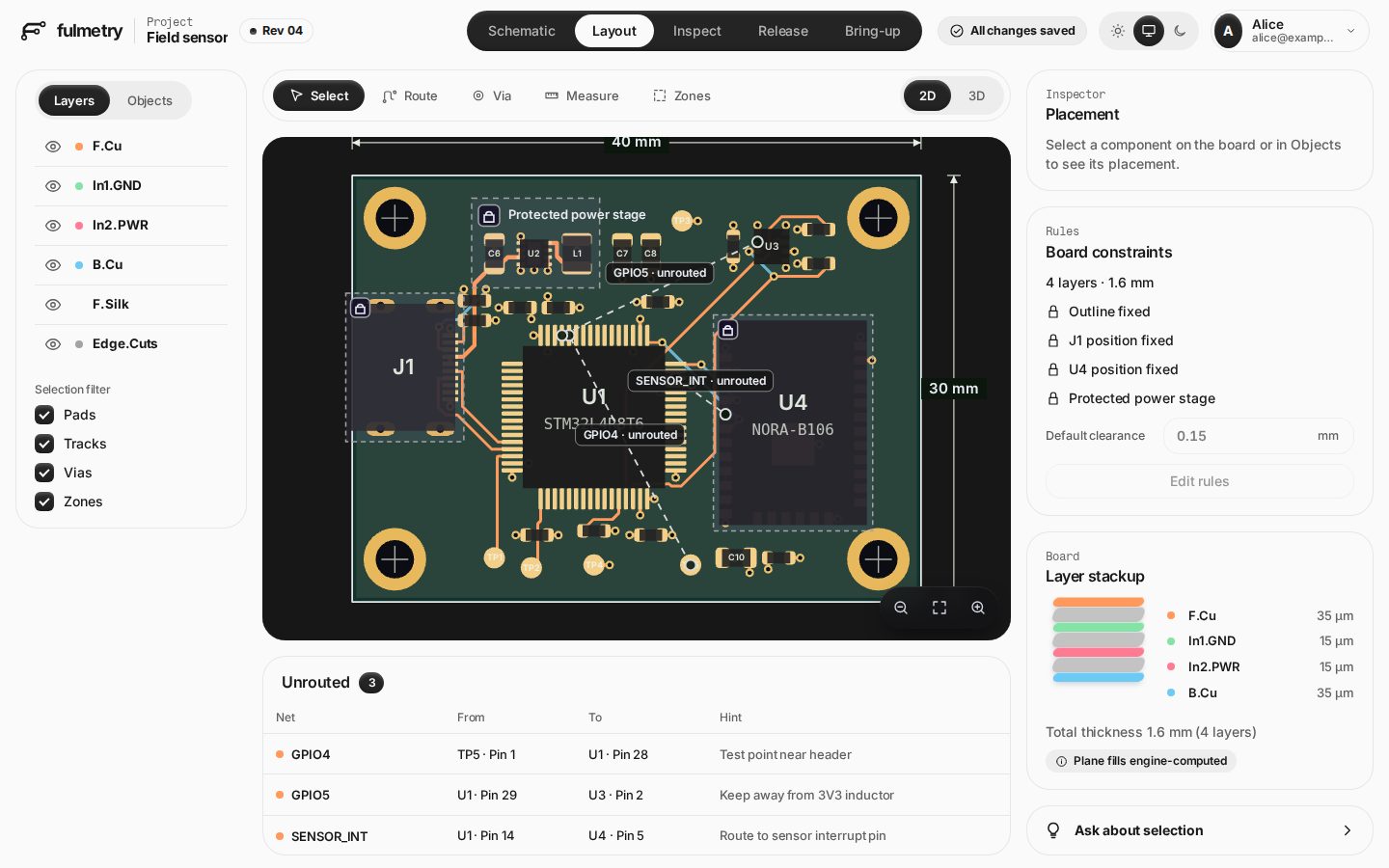
The firmware engineer building a first custom board.
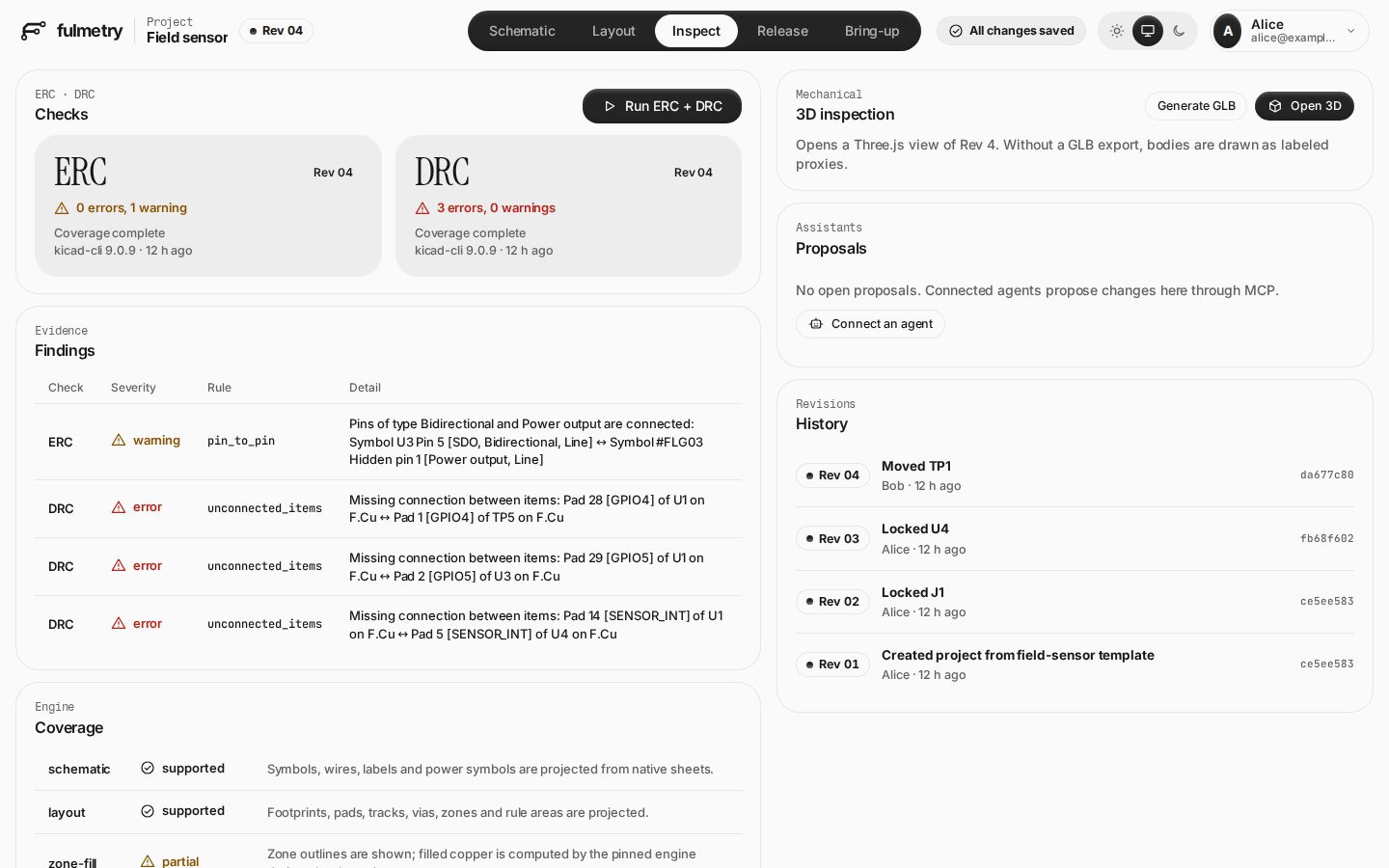
“Help me inspect the board, identify unresolved decisions, run checks and produce a KiCad project I can hand off.”
 Fulmetry
 Cloud workbench for KiCad
Design, check and release native KiCad projects with your team and your agents. Every change is a typed command, every check is evidence, and nothing ships on a stale pass.
Who it's for
Follow one board from jumper wires to a client's sign-off — through the worlds of the nine people we met while onboarding.
“Help me inspect the board, identify unresolved decisions, run checks and produce a KiCad project I can hand off.”
“Keep the board history understandable, let my coding agent propose scoped changes, and show me what still needs human review.”
“Give circuit changes stable identities, inspectable evidence and deterministic outputs.”
“Show me the design, proposed changes, check findings, coverage and manufacturing evidence so I can make the final call.”
“Give us one shared process for proposing, checking, reviewing, releasing and investigating a board.”
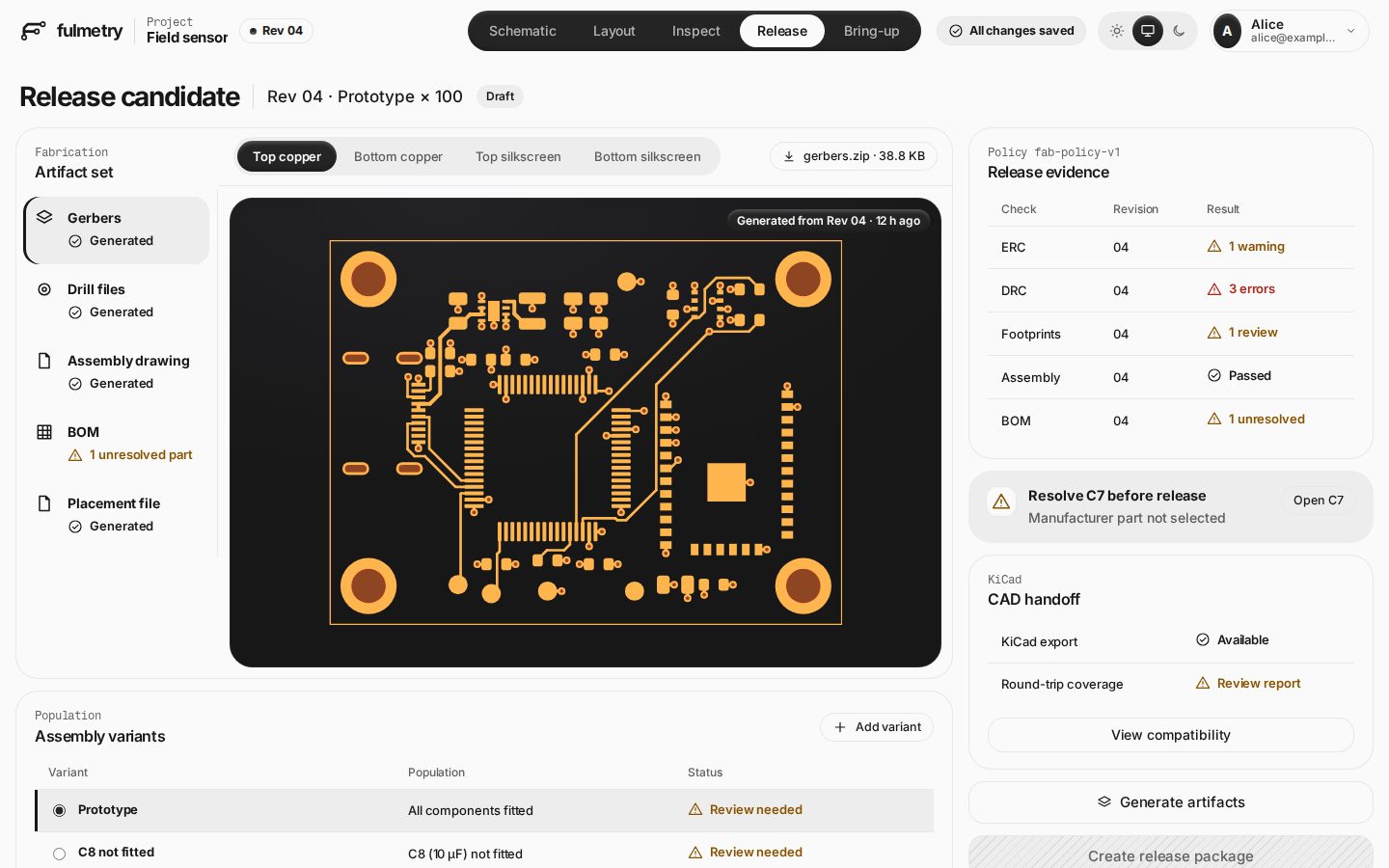
“Produce a traceable manufacturing package, and never let stale evidence or unresolved parts pass for release readiness.”
“Show me this unit's 3V3 rail during a radio burst next to a known-good capture — and which release it was built from.”
“Let my client review the exact revision, see what was checked, and approve the release package themselves.”
“Install the Fulmetry skill, read the design summary, and propose typed changes a person accepts.”